News
Beyond fear: HKBU’s School of Continuing Education study finds alternatives to “scare tactics” through reinforcing daily weather perception and clear, factual future risks to overcome eco-anxiety and empower real climate action
26 JUN 2026
A global team led by the School of Continuing Education (SCE) at Hong Kong Baptist University (HKBU), in collaboration with researchers from Imperial College London, Sun Yat-Sen University, the State University of New York and the University of Pécs, has found that extreme-weather fear can paralyse people rather than motivate them. Published in Global Environmental Change, a leading international journal, the study offers practical guidance for Hong Kong policymakers, educators and communicators on how to inspire civic climate action through everyday experience.
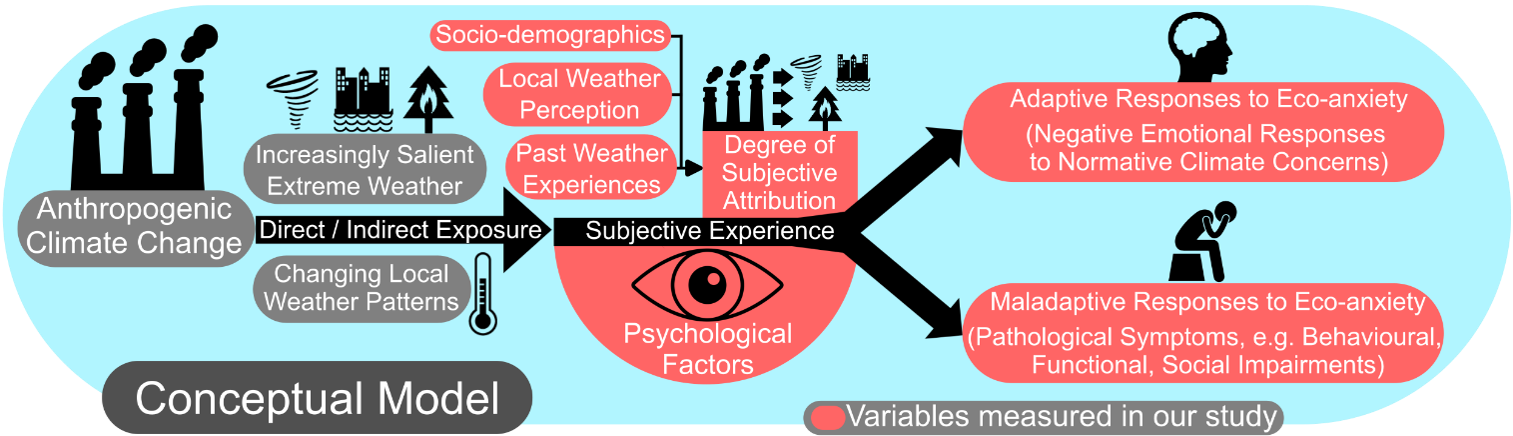
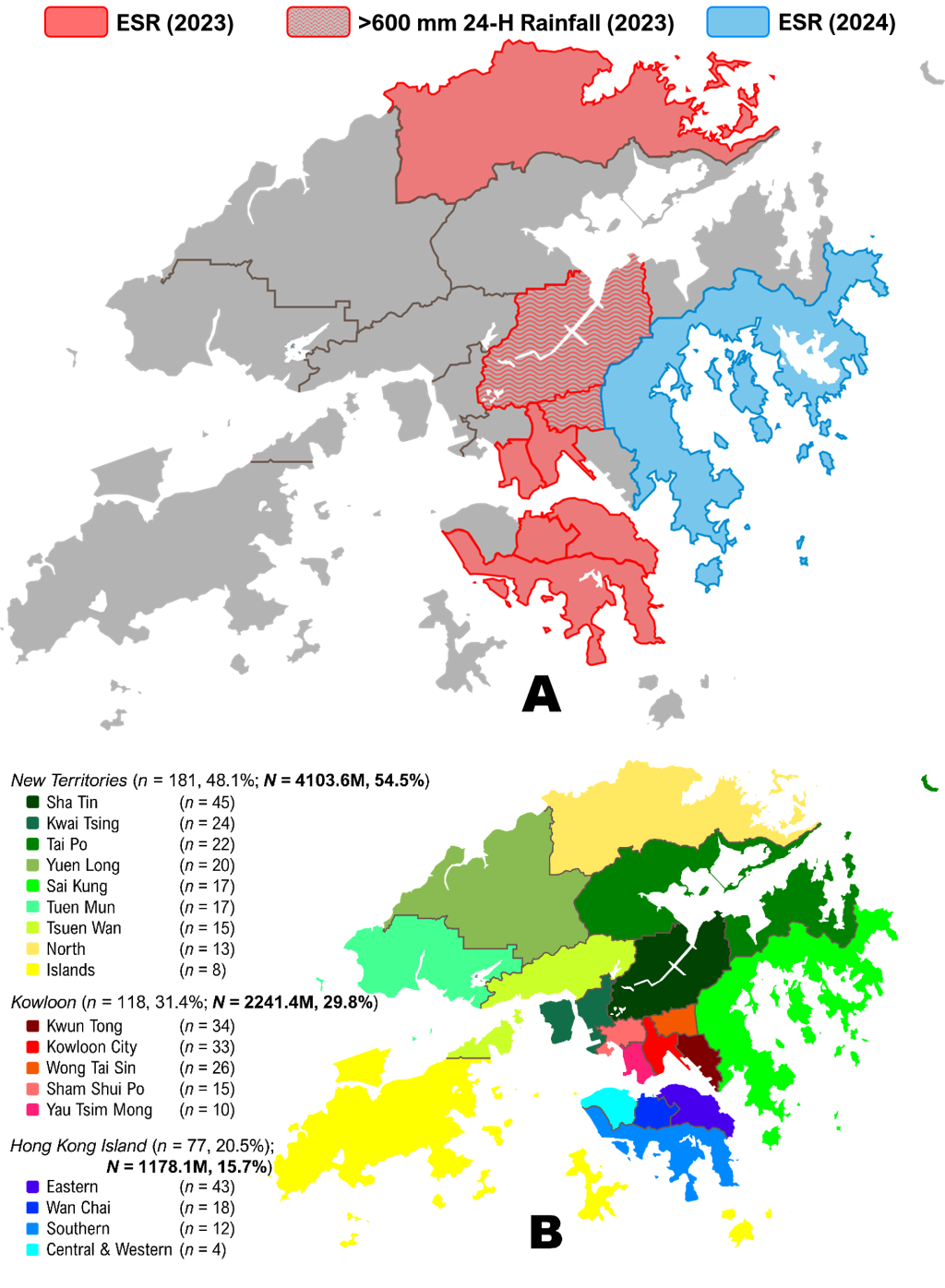
The team surveyed 376 Hong Kong adults during the 2024 typhoon season to examine "eco-anxiety", and how people’s experiences of extreme weather and everyday weather shape their ideas about climate change. Contrary to expectations, witnessing an extreme weather event was not the defining factor for recognising the scale of local climate impacts in Hong Kong. The study contributes to the debate that the use of “scare tactics” or “fear‑based messaging” in climate change communication may produce short‑term attention but can also lead to counterproductive feelings of severe anxiety and functional impairment.
Key takeaways for the public
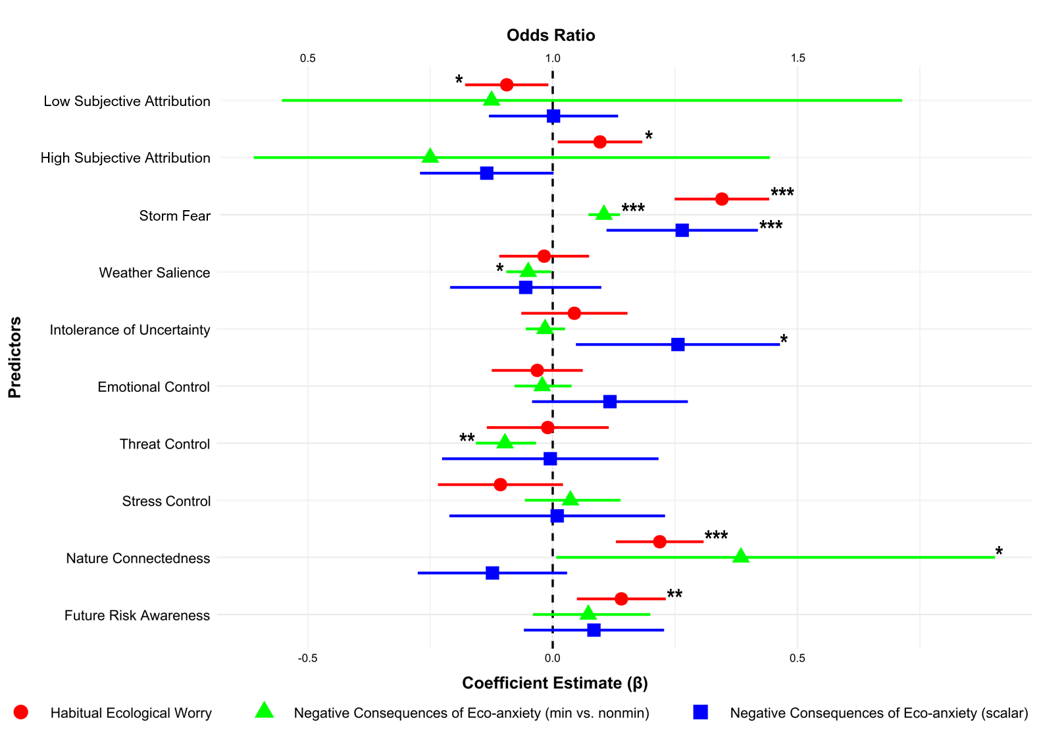
- Fear is “double-edged”: Storm fear can prompt people to reconsider their beliefs and attentiveness towards climate issues, which can help develop their personal sense of climate resilience. This can be the first step to pro-climate actions, such as seeking climate solutions and changing their behaviours accordingly. However, storm fears may also trigger paralysing aspects of eco‑anxiety that can undermine daily functioning and may lead to coping strategies to distance from these challenging emotions, such as the avoidance or scepticism for climate issues.
- Daily weather matters more: Experiencing a severe typhoon alone did not automatically increase climate attribution. Instead, the individuals who noticed and cared about daily local weather shifts were more likely to truly recognise the footprint of the climate crisis.
- Nature and facts work: Strengthening nature connectedness and promoting factual awareness of future risks did not elicit “double-edged” effects on people’s eco-anxiety, suggesting that they are effective methods of raising climate worry and steering people towards feeling empowered to perform constructive, positive climate actions.
What this means for Hong Kong
For years, global environmental campaigns have relied on shocking imagery of natural disasters to shake the public into action. Dr Sam Lau, lead author and person-in-charge of the Research Centre for Environment and Human Health at SCE, HKBU, warns that “fear‑mongering can freeze people in their tracks.” To build climate resilience, the study recommends:
- Reconnecting urban residents with local nature through accessible green spaces. Spending time in country parks and urban parks not only benefits mental health but also helps foster attachments to nearby nature as valuable resources that protect us, and need protection from climate impacts.
- Communicating future risks calmly and factually, rather than sensationally.
- Encouraging attention to daily weather, helping the public realise that climate change is not a far-off threat – it is happening right outside their window.
Dr Lau added: "Promoting future risk awareness and increasing nature connectedness – without relying on fear – can increase urban residents’ confidence and capacity for real climate action."
Professor Ronald CK Chung, Dean of SCE, HKBU, said: “This study highlights HKBU’s work on environment and human health and stresses that sustainable cities require both infrastructure and renewed human–nature connection.”
Read the full study here
Lau, S.S.S., Fong, J.W.L., Lawrance, E. L., Chui, A. W. L., Zhang, W., Lin, S., Yıldız, B., & Zsido, A. N. (2026). Extreme weather salience as a climate crisis signal: Examining the role of extreme weather fear in adaptive and maladaptive responses to eco-anxiety. Global Environmental Change, 98, 103290. https://doi.org/10.1016/j.gloenvcha.2026.103179